2025 and 2026 IRS Standard Mileage Rates
Effective January 1 of each year, the IRS releases optional standard mileage rates that simplify how taxpayers calculate deductible vehicle costs. These rates apply to cars, vans, pickups, and panel trucks regardless of fuel type (gas, diesel, hybrid, or electric).
Standard Mileage Rates Summary
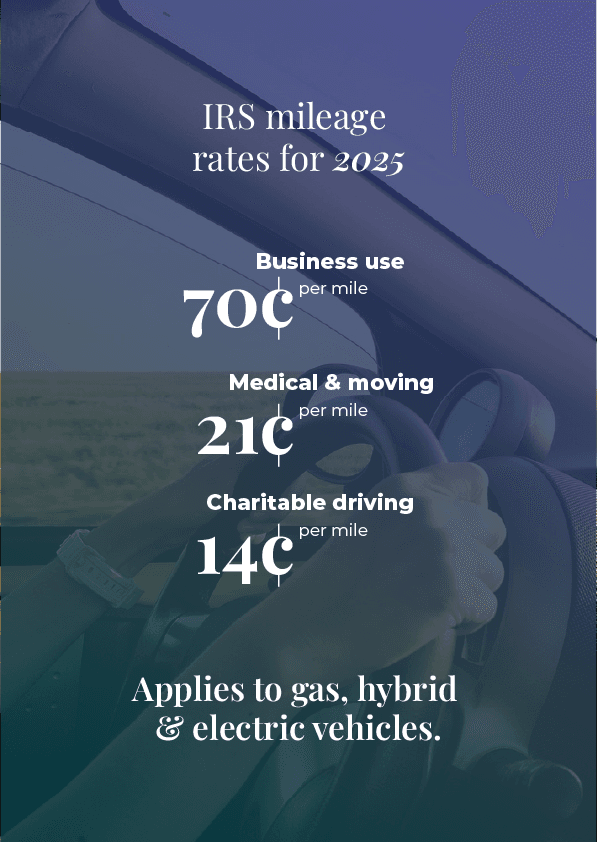
| Category | 2025 Rate | 2026 Rate | Change |
| Business use | 70.0¢ per mile | 72.5¢ per mile | ↑ 2.5¢ |
| Medical use | 21.0¢ per mile | 20.5¢ per mile | ↓ 0.5¢ |
| Moving (qualified) | 21.0¢ per mile | 20.5¢ per mile | ↓ 0.5¢ |
| Charitable use | 14.0¢ per mile | 14.0¢ per mile | No change |
Key takeaways:
- The business rate increases again in 2026.
- Medical and qualified moving rates dip slightly.
- The charitable rate remains unchanged because it’s set by statute.
What the 2026 Rates Mean for Deductions
Business Mileage (Most Common)
- 2026: 72.5 cents per mile
- Applies to miles driven for business purposes — like client visits, deliveries, or job-related travel not reimbursed by an employer.
- Use this rate to calculate the deductible cost of operating your vehicle without tracking every expense line item.
Medical Mileage
- 20.5 cents per mile in 2026
- Applies to medical travel for specific eligible situations.
- Less common but important for healthcare-related deductions.
Qualified Moving Mileage
- 20.5 cents per mile in 2026
- Available only to certain eligible active-duty Armed Forces and intelligence community members relocating under permanent change-of-station orders.
Charitable Mileage
- 14 cents per mile
- Fixed by law and does not change with inflation.
- Applies when you use your vehicle performing volunteer work for qualified charities.
Mileage Rates Over Time
Seeing how mileage rates trend helps you plan for future expense tracking and deductions.
Recent IRS Mileage Rates (Business Use)
| Year | Business Mileage Rate |
| 2023 | 65.5¢ |
| 2024 | 67.0¢ |
| 2025 | 70.0¢ |
| 2026 | 72.5¢ |
The gradual increase reflects rising vehicle operating costs and inflation.
Standard Mileage vs. Actual Expenses
When calculating vehicle deductions for business use, you generally have two options:
| Method | Pros | Cons |
| Standard Mileage | Simple, easy to apply | May yield lower deduction if actual costs are high |
| Actual Expense Method | May provide a higher deduction for expensive vehicles or heavy use | Requires detailed tracking of fuel, insurance, maintenance, and depreciation |
Once you choose a method for a specific vehicle (especially if it’s owned rather than leased), the IRS requires consistency rules to be applied correctly.
Recordkeeping Requirements
To support mileage deductions, the IRS expects clear documentation. Documents should show:
- Date of each trip
- Starting point and destination
- Business purpose
- Miles driven
IRS audits commonly focus on incomplete or reconstructed logs, so keeping contemporaneous records throughout the year is essential.
Employer Reimbursements and Compliance
Employers often use the IRS standard mileage rate to reimburse employees for business travel in personal vehicles. Paying more than the IRS rate may result in taxable income for the employee, and paying less may leave the employee unreimbursed.
Why the Rates Change
The IRS adjusts standard mileage rates annually based on a study of vehicle operating costs, including:
- Fuel and electricity prices
- Insurance and maintenance
- Depreciation and other fixed costs
- Inflation and economic trends
Charitable mileage doesn’t change because it’s set by law, not by annual cost studies.
IRS Mileage Rates: Quick Reference Table
| Use Category | Applies to | 2026 IRS Rate |
| Business | Tax deductions & employer reimbursements | 72.5¢ |
| Medical | Qualified medical travel | 20.5¢ |
| Moving | Certain military relocation | 20.5¢ |
| Charitable | Volunteer service miles | 14¢ |

Bottom Line
The 2026 IRS mileage rate increase for business miles means more deduction potential for many taxpayers. The slight adjustment for medical and moving rates reflects updated cost data. Charitable mileage remains fixed in 2026.
Staying current with mileage rates and documenting trips thoroughly helps ensure deductions are supported and compliant. If you’d like help choosing the best deduction method or setting up tracking systems for your organization, SSL Associates can guide you.