Why Outdated Systems Stick Around
Most nonprofits do not intentionally choose outdated accounting systems. They keep them because they feel reliable. The staff know where everything lives. Reports look familiar—even if they take effort to prepare.
Budget considerations often play a role. Upgrades can feel optional compared to program costs. Instead of replacing the system, teams adapt by layering spreadsheets and manual checks on top of it.
At first, that approach works. Early success reinforces the habit. The system appears functional because staff invest extra time to make it work.
Over time, however, effort replaces structure—and risk grows quietly beneath the surface.
What Outdated Looks Like in Practice
An outdated accounting system does not always look broken. More often, it shows up in day-to-day inefficiencies:
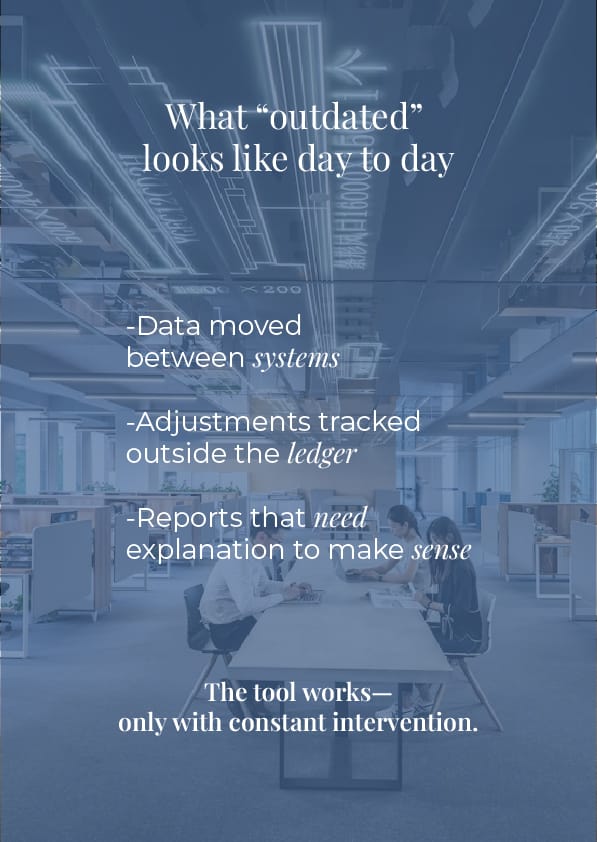
- Data moved between multiple systems
- Adjustments tracked outside the general ledger
- Reports that require explanation before they make sense
- Grant tracking handled in spreadsheets rather than within the accounting tool
- Restricted funds reconciled manually
Month-end close takes longer than expected. Reports vary depending on who prepares them. The system functions—but only with constant intervention.
These are signs the tool no longer fits the organization’s size or complexity.
Where Old Systems Create the Most Strain
As nonprofits grow, outdated systems create increasing pressure.
Common stress points include:
- Manual journal entries used to correct system limitations
- Financial reports that require cleanup before sharing
- Broad user access due to limited system controls
- Difficulty tracking multiple funding sources accurately
During audits or financial reviews, the strain becomes more visible. Supporting documentation may live outside the accounting system. Staff spend time explaining processes instead of focusing on analysis.
Boards may struggle to interpret reports because context is scattered. Confidence in the numbers depends more on trust in individuals than trust in the system.
The risk rarely appears as one major error. It shows up as delays, confusion, and reliance on specific people to make sense of the data.
The Hidden Cost of Not Updating
The cost of outdated systems rarely appears as a clear line item. Instead, it shows up in:
- Staff time spent reconciling data
- Stress caused by manual processes
- Knowledge concentrated in a few individuals
- Slower onboarding of new team members
- Delayed decision-making due to incomplete information
Leadership feels the impact when reports lack clarity or timeliness. Board conversations shift toward explanation rather than strategy.
These inefficiencies remain manageable—until something changes. A leadership transition, new grant requirements, or tighter reporting standards can quickly turn inconvenience into exposure.
When Change Stops Feeling Optional
Most nonprofits replace accounting systems not because they want to—but because they must.
An audit highlights control gaps. A major grant introduces reporting requirements the system cannot support. Growth reaches a point where manual fixes no longer hold.
By then, change feels urgent. Staff feel stretched. Leadership faces pressure to move quickly. Decisions happen reactively rather than strategically.
Evaluating systems earlier creates room to plan. It allows organizations to assess whether their tools still match their needs before urgency sets in.
What Better Alignment Looks Like
An effective accounting system supports clarity instead of requiring constant workarounds.
When alignment improves:
- Month-end close shortens
- Reports remain consistent regardless of who prepares them
- Grant and restricted fund tracking lives within the system
- Internal controls feel structured rather than improvised
- Leadership gains confidence in daily financial insight
Better systems create clarity. Alignment reduces effort and builds trust.